Home/Activation/Value-based acquisition
All solutions
Value-based acquisition
Optimise acquisition for customers who keep paying.
The first purchase can miss later renewals and repeat spending. Signal predicts a customer's longer-term value and makes it available to advertising platforms as an earlier signal of what that customer may be worth.
Activation
The first purchase can hide the difference
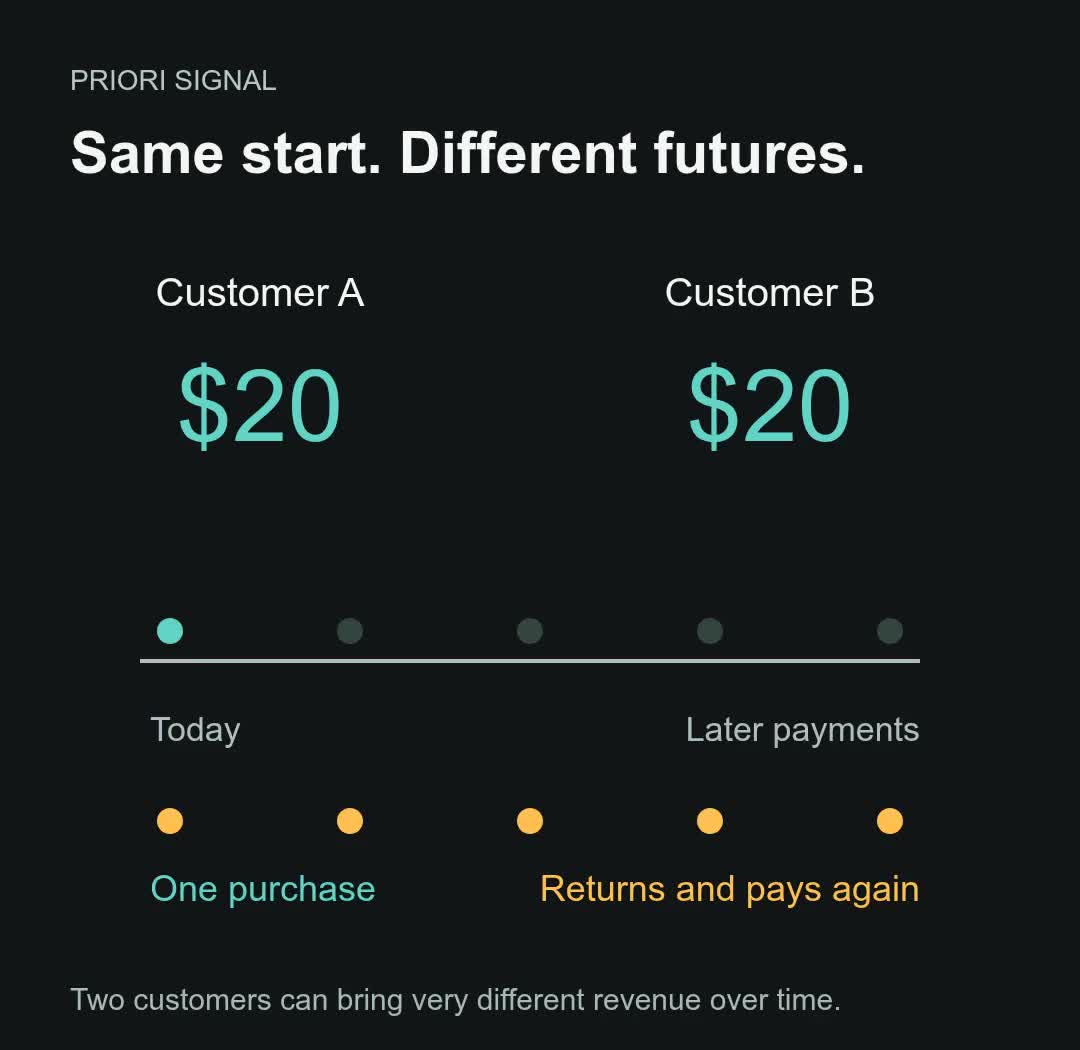
Some acquisition setups send the value of the first purchase as the conversion value. That signal is timely, but it cannot yet show who will return. Two customers may each spend $20 today. One may stop there, while the other rebills for several months.
If both conversions carry the same value, the advertising system sees the same early outcome. Sending an estimate of later value gives a supported campaign more information about the customers you want to acquire.
Estimate total value while it is still forming
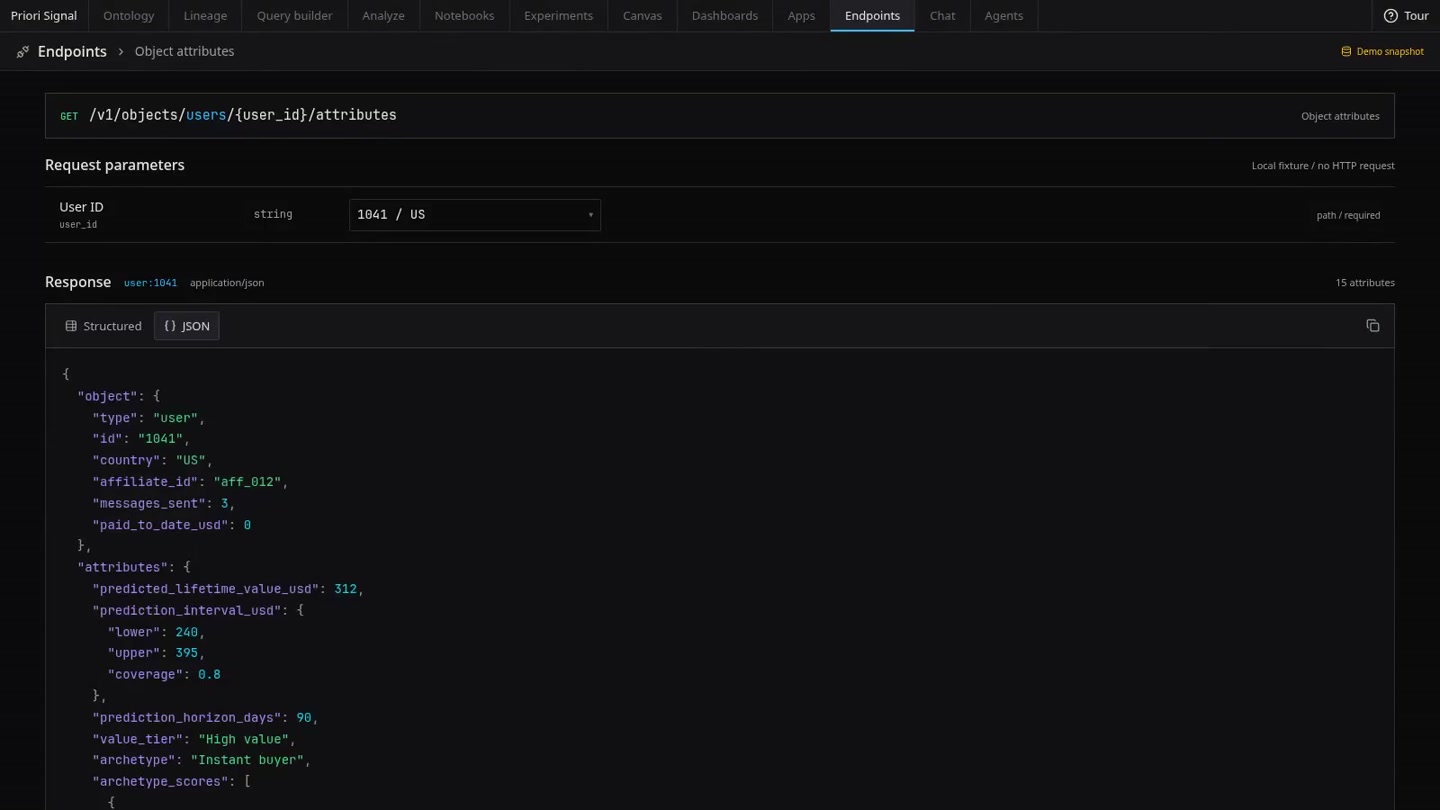
Predicted lifetime value, or pLTV, is an early estimate of the customer's total value over a defined period, such as 90 days. It includes both recorded value and the additional value expected during that period.
The machine learning model uses information available at prediction time and patterns from earlier customers. Inputs can include acquisition source, geography, product activity, purchases, subscriptions, and rebills. The useful inputs depend on the outcome and on model evaluation.
Each estimate remains attached to the customer and source it describes. The shared data model keeps the prediction connected to the recorded activity and payments used to check it later.
Use pLTV as the value signal
When the selected network, campaign type, and account setup support value-based optimisation, your backend can send the predicted value through the required event or postback. The advertising platform uses that value with its own signals and campaign goal to favour acquisitions expected to create more long-term value.
The advertising platform sets the bid using the supplied customer value, campaign budget, and return target. Predicted lifetime value is the value signal; the platform remains responsible for auction-time bidding.
Check the prediction and the campaign
Model evaluation asks whether early estimates match later outcomes at the same value horizon. Priori can review error, ranking, and calibration across sources and customer groups. As more payments arrive, more of the outcome becomes recorded rather than predicted.
Campaign evaluation is a separate step. A controlled rollout can compare the pLTV signal with the current setup using agreed measures such as mature customer value, return on ad spend, or acquisition cost. The prediction supports the test. It does not by itself prove that the campaign caused an improvement.